

What a True Family Office Is And Why the Term is So Often Misunderstood
A Perspective on Stewardship, Wealth, and Generational Responsibility
A 5T Wealth Perspective
The purpose of a family office is not to simply grow wealth, but to steward it across generations.
Wealth brings opportunity.
It also brings responsibility.
For families navigating significant wealth, the structure surrounding that wealth can matter as much as the investments themselves.
The Purpose of a Family Office
For many families, the journey toward a family structure begins not with a search for better investment performance, but with the realization that wealth introduces a growing number of interconnected decisions.
As wealth evolves, so too does the number of responsibilities surrounding it.
Investments must align with estate planning.
Tax strategies influence liquidity decisions.
Business ownership affects succession planning.
Philanthropic goals reflect family values.
Over time, managing these decisions independently becomes increasingly difficult.
A true family office exists to bring clarity, alignment, and continuity to that complexity, ensuring that the many decisions surrounding wealth work together in service of a family’s long-term vision.
The Misunderstood Term
In recent years, the term “family office” has become increasingly common across the wealth management industry.
Investment firms, private banks, and advisory practices often use the label to signal elevated service.
Yet in many cases, the term is misapplied.
A family office is not simply an investment management with concierge service. It is not a traditional advisory relationship serving affluent clients. And it is certainly not a marketing designation.
A genuine family office exists to orchestrate the full complexity of a family’s financial life, integrating investment strategy, estate planning, governance, philanthropy, and generational stewardship.
The distinction matters.
At its core, a family office exists to solve one problem: the growing complexity that wealth introduces into the life of a family.
Families with significant wealth rarely face a shortage of advice.
What they often lack is coordination.
When Wealth Becomes Complex
As wealth grows, so does complexity.
Investments expand across public and private markets.
Families acquire operating businesses and real estate.
Estate structures evolve.
Philanthropic initiatives deepen.
Each dimension introduces decisions that must work together.
In response to this growing complexity, the number of family offices around the world has expanded rapidly in recent years (Deloitte, 2019; UBS, 2023). Research suggests that there are now well over 8,000 family offices globally, with the number expected to continue rising as more families seek integrated stewardship of their wealth and long-term legacy.
A family office exists to ensure that every decision supports a unified long-term strategy.
The Family Office Perspective
A family office operates with a fundamentally different mindset than traditional wealth management.
The focus is not simply on investment performance in a given year.
It is on stewardship across generations.
Family offices think in decades rather than quarters. They prioritize alignment between investments, planning, governance, and family priorities.
Just as importantly, a true family office must be tailored to the family it serves.
No two families share the same values, aspirations, structures, or responsibilities. A family office must therefore be designed around those realities, aligning strategy, governance, and planning in a way that reflects the unique character and long-term vision of the family itself.
For that reason, the work of a family office is never standardized.
It is shaped by the family.
The Responsibility of Generational Wealth
Preserving wealth across generations is one of the defining responsibilities of a family office.
History shows that this is not always easy.
Research suggests that approximately 70% of affluent families lose their wealth by the second generation and nearly 90% by the third generation (Williams Group, 2014).
At the same time, the United States is entering a period of historic transition.
An estimated $124 trillion will transfer between generations by 2048, often referred to as the Great Wealth Transfer (Cerulli Associates, 2022).
For many families, the challenge is not simply growing wealth.
It is preparing the next generation to steward it responsibly.
Beyond Traditional Advice
For many families, the transition to a family office structure begins when wealth becomes too complex for traditional advisory models.
Investment managers, tax advisors, estate attorneys, and insurance specialists each provide valuable expertise.
Many affluent families rely on several professional advisors, each focused on a different aspect of their lives. While that expertise is essential, it can also create fragmentation as wealth and complexity grow.
Decisions made in one area can create unintended consequences in another.
In many ways, the defining role of a family office is not simply providing advice but ensuring that the many forms of advice a family receives work together.
Families With Complex Lives
The family office model is most valuable for families whose financial lives extend beyond a traditional investment portfolio.
These families may be navigating operating businesses, real estate holdings, trusts and estate structures, philanthropic initiatives, or preparing the next generation to assume greater responsibility.
Often, multiple advisors are already involved – investment managers, tax professionals, estate attorneys, and business advisors.
But without coordination, even the best advice can become fragmented.
A true family office exists to ensure that these decisions operate within a single unified strategy designed for the long term.
Families Serving Families
At its heart, a family office exists to serve families, not simply portfolios.
Behind every balance sheet is a family navigating life’s milestone: raising children, caring for parents, building businesses, supporting communities, and shaping the legacy they will leave behind.
Those responsibilities are not abstract.
They are deeply personal.
At 5T Wealth, many members of our team are supporting and raising families of our own and thinking about the responsibilities that come with planning for the future. Working alongside multiple families gives us perspective on the challenges and opportunities that wealth can bring across generations.
That shared perspective shapes how we approach our work.
Because the role of a family office is not simply to manage wealth.
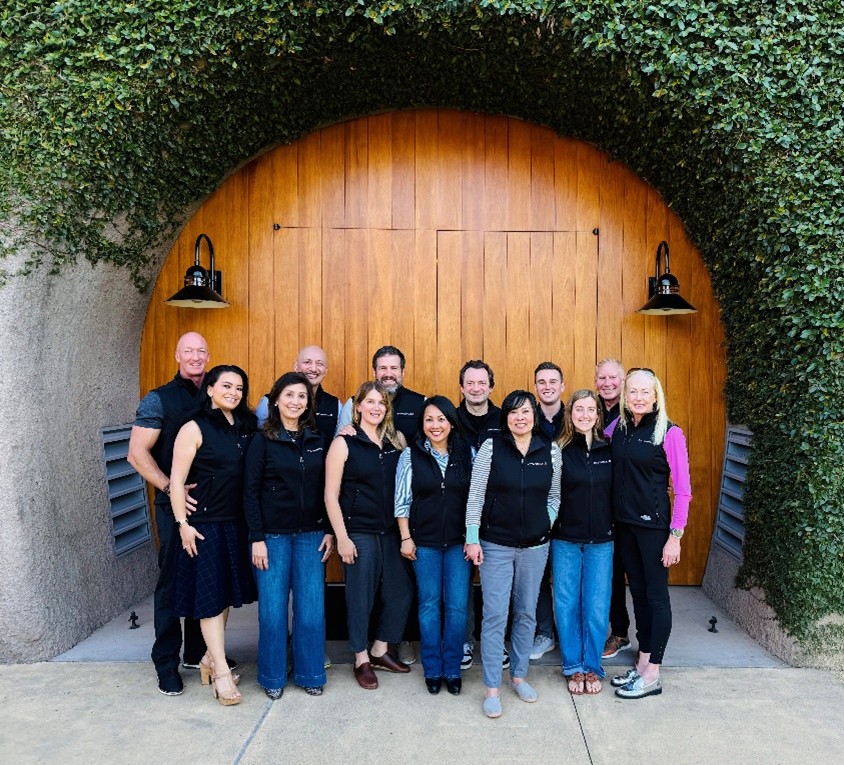
5T Family
It is to help families steward the opportunities, responsibilities, and values that wealth carries from one generation to the next.
The Quiet Advantage
For many families, the benefits of a family office are not always immediately visible.
There is rarely a single investment or strategy that defines the relationship.
Instead, the value reveals itself over time through clarity, alignment, and continuity.
Decisions become more coordinated.
Strategies reinforce one another.
Advisors collaborate more effectively.
Most importantly, families gain confidence that the many moving parts of their financial lives are aligned toward a shared long-term vision.
For some families, there comes a point when wealth management alone is no longer sufficient – what they require is coordination and stewardship.
A Family Office Creed
We believe wealth carries both opportunity and responsibility.
We believe the purpose of wealth is not only growth, but continuity—for families, values, and the generations that follow.
We believe complexity requires—and stewardship requires coordination.
And we believe the work of a true family office is to ensure that wealth continues to serve the families it was meant to support.
5T Wealth
Families serving families.
Stewarding wealth so families and future generations can thrive.
Because wealth, at its best, is not simply accumulated, it is entrusted.
Warmly,

Jackie Lou D. Raquidan
Chief Growth Officer
5T Wealth, LLC
Main (707) 224-1340
Cell (707) 337-3581
JackieLou@5twealth.com
Disclosure and Disclaimer - Updated last on October 14, 2025:
Wealth With Intention is a proprietary newsletter written for clients, friends, and affiliates of 5T WEALTH, LLC (5T), which is an SEC registered investment advisor. Information presented is for educational purposes only. The information does not intend to make an offer or solicitation for the sale or purchase of any specific securities, investments, or investment strategies. Investments involve risk and are not guaranteed. 5T has reasonable belief that this letter does not include any false or material misleading statements or omissions of facts regarding services or investments. 5T has reasonable belief that the content as a whole will not cause an untrue or misleading implication regarding the adviser’s services, investments, or client experiences.
The opinions expressed are those of the author and are subject to change without notice. The opinions referenced are as of the date of publication and are subject to change due to changes in the market or economic conditions and may not necessarily come to pass. Any opinions, projections, or forward-looking statements expressed herein are solely those of the author. They may differ from the views or opinions expressed by other areas of 5T and are only for general informational purposes as of the date indicated.
5T has presented information in a fair and balanced manner. 5T is not giving tax, legal, or accounting advice.
Past performance should not be considered an indicator of potential future performance. If you do not consider yourself suitable, either emotionally or financially, to experience volatility and/or losses in financial markets, you should not invest. The portfolio managers at 5T do not guarantee investment results.
Charts, displays and graphs may be used as illustrations. They are not intended to be used by themselves to determine which securities to buy or sell, or when to buy or sell them. Such charts and graphs offer limited information and can’t be used on their own to make investment decisions.
Wealth with Intention does not represent the opinions of Fidelity, Fidelity Institutional Brokerage Group, NFS or anyone employed by Fidelity in any capacity. Neither Fidelity, Fidelity Institutional Brokerage Group, nor NFS, nor anyone employed by Fidelity in any capacity has participated in the creation of Wealth With Intention and they are not responsible for the contents or distribution of Wealth With Intention.
Wealth With Intention does not represent the opinions of Charles Schwab Corporation, Schwab Advisor Services or anyone employed by Schwab in any capacity. Neither Charles Schwab Corporation nor Schwab Advisor Services, nor anyone employed by Schwab in any capacity has participated in the creation of Wealth With Intention and they are not responsible for the contents or distribution of Wealth With Intention.
The investment objectives of various strategies mentioned in Wealth With Intention may be substantially different from one another. Therefore topics or investments mentioned in Wealth With Intention may or may not apply to specific managed accounts and/or strategies. If you are unsure which strategies your accounts are invested in please ask a representative of 5T to clarify that for you.
The assets held in managed accounts at 5T may include stocks, bonds, cash, commodities, foreign exchange, mutual funds or exchange traded funds (ETF's), money market accounts or limited partnerships that represent the same. They are subject to market fluctuation and the potential for losses. The assets are not insured. The value and income produced by these investment products may fluctuate, so that an investor may get back less than they initially invested.